The internet has transformed from a small academic network into the most powerful communication system in human history. Over the past few decades, it has reshaped how we live, work, learn, and connect. Today, billions of people rely on it every second of the day.
In this blog, we’ll explore how internet usage has grown over the years, along with answers to key questions like Does 70% of the world use the internet?, Is it true that 90% of the world’s data was created in the last 2 years?, How long would 200 GB of internet last?, and How has the internet grown?
How Has the Internet Grown?
The internet has experienced exponential growth since its creation.
Early Stage (1990s)
- Only scientists and universities used it
- Very limited access
- Slow dial-up connections
Growth Phase (2000–2010)
- Broadband internet introduced
- Rise of websites like Google and Facebook
- Email and early social media became popular
Mobile Revolution (2010–2020)
- Smartphones changed everything
- Apps like Instagram, YouTube, WhatsApp exploded
- Internet became part of daily life
Modern Era (2020–2026)
- 5G connectivity
- AI-driven internet services
- Global digital economy expansion
👉 The internet has evolved from a tool into a global necessity.
Does 70% of the World Use the Internet?
Yes, in 2026, approximately 70% of the global population uses the internet.
Key statistics:
- Global population: ~8.1 billion
- Internet users: ~5.5–5.8 billion
- Offline population: ~2.3 billion
What this means:
- Internet access is now mainstream
- Most people are digitally connected
- Only a small percentage remains offline
Why this growth happened:
- Affordable smartphones
- Cheaper internet data
- Expansion of mobile networks
- Digital education and services
👉 The internet has become a global utility like electricity and water.
Internet Growth Over the Years (Timeline Overview)
1995
- Less than 1% of the world used the internet
- Mainly academic and government usage
2005
- Around 16% global usage
- Rise of websites and email communication
2015
- Over 40% global usage
- Social media boom begins
2020
- Around 60% global usage
- Mobile internet dominates
2026
- Around 70% global usage
- AI and digital ecosystems expand
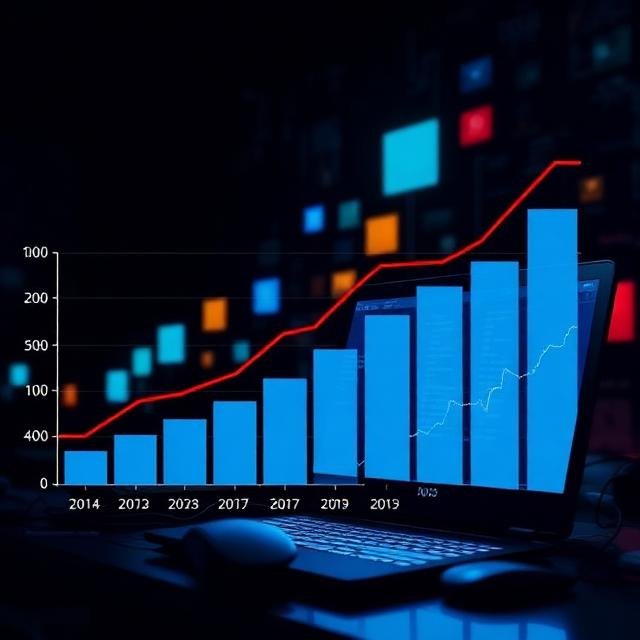
👉 Internet usage has grown from millions to billions of users in just a few decades.
Is It True That 90% of the World’s Data Was Created in the Last 2 Years?
Yes, this statement is largely true in the context of modern data growth trends.
Explanation:
- Massive data is generated daily from:
- Social media
- Videos
- Online transactions
- IoT devices
- AI systems
Why data is growing so fast:
- Short video platforms like TikTok and YouTube
- Cloud storage expansion
- Smart devices collecting data
- AI training datasets
Key insight:
- Human data generation has doubled rapidly
- Most digital data in existence is very recent
👉 The world is experiencing an explosion of digital information.
Internet Usage Growth by Category
The internet didn’t just grow in users—it expanded in usage types.
1. Communication Growth
- Email replaced letters
- Messaging apps replaced SMS
- Video calls became normal
2. Entertainment Growth
- Streaming replaced TV
- Gaming moved online
- Short-form videos dominate
3. Education Growth
- Online learning platforms expanded
- Remote education became global
4. Business Growth
- E-commerce exploded
- Digital marketing became essential
- Remote work increased
5. Information Growth
- Search engines became primary knowledge tools
- Wikipedia and online resources grew
How Long Would 200 GB of Internet Last?
The duration of 200 GB depends on usage patterns.
Light Usage (Browsing, Emails, Social Media)
- Usage: ~1–2 GB per day
- 200 GB lasts: 3–6 months
Moderate Usage (Streaming, YouTube, Calls)
- Usage: ~5–10 GB per day
- 200 GB lasts: 20–40 days
Heavy Usage (4K Streaming, Gaming, Downloads)
- Usage: ~20–50 GB per day
- 200 GB lasts: 4–10 days
Key takeaway:
- Internet consumption depends on behavior
- Video streaming is the biggest data consumer
👉 Modern internet usage is heavily driven by video content.
Factors Driving Internet Growth
1. Smartphone Adoption
Smartphones made internet access universal.
2. Affordable Data Plans
Cheaper internet increased usage worldwide.
3. Social Media Expansion
Platforms created daily engagement habits.
4. Digital Economy
Online businesses increased internet dependency.
5. Technological Innovation
AI, cloud computing, and 5G accelerated growth.
Regional Internet Growth Trends
Asia
- Largest number of internet users
- Fastest adoption in India and Southeast Asia
Africa
- Fastest growth rate
- Mobile internet dominates
Europe
- High and stable internet penetration
North America
- Near-universal internet access
Latin America
- Rapid growth in mobile internet usage
Impact of Internet Growth on Society
1. Communication Revolution
- Instant global communication
- Social media connectivity
2. Economic Transformation
- Rise of digital jobs
- Growth of e-commerce
3. Education Accessibility
- Online learning opportunities
- Skill development platforms
4. Lifestyle Changes
- Smart homes
- Digital payments
- Online entertainment
5. Information Accessibility
- Instant access to knowledge
- Search engine dependency
Future of Internet Growth
The internet will continue evolving rapidly.
1. 6G Technology
Even faster global connectivity
2. AI-Driven Internet
Smarter and personalized experiences
3. Global Satellite Internet
Internet access in remote regions
4. Metaverse Expansion
Immersive digital environments
5. Fully Connected World
Almost universal internet access
Final Thoughts
Understanding how internet usage has grown over the years shows how dramatically the world has changed. From a small academic network to a global digital ecosystem, the internet now connects billions of people every day.
If you are wondering Does 70% of the world use the internet?—the answer is yes, and this number continues to rise.
Similarly, data growth is exploding, with most of the world’s digital information created in just the last few years, highlighting how fast the digital world is expanding.
Ultimately, the internet is not just growing—it is reshaping the entire structure of human life, communication, and global progress.